Traditional Publishing vs. Self-Publishing: Pros and Cons
A fantasy epic involving pirates,. A love story based in 19th-century England. A nonfiction guide to quitting an addiction. What do all of these have in common? They're all book ideas.
Many people have aspirations of becoming a published author, but there can be hesitancy when it comes to taking that first step.
- What does the process look like?
- Do I have to go through a publisher?
- Am I even qualified to do this?
The truth is, book publishing no longer needs to involve your book being acquired by a publisher. Self-publishing is more accessible and valuable than ever today, in large part due to companies like Amazon.
If you're planning on writing a book, one of the first questions you'll need to answer is whether to use a book publisher to publish your book, or go the self-publishing route. Let's discuss their pros and cons.
Pros and Cons of Using a Publisher
Pro: Wider Reach
One of the biggest benefits of using a publisher is a wide network of distribution networks like bookstores, libraries and online stores. The potential for prestige, fame and
Con: Slower Timeline
Expect anywhere from a year to two years or longer to get your book published, even if it's already been written. There are lots of approvals, reviews, restrictions and other potential roadblocks, usually resulting in a much longer timeline than the self-publishing route.
Pro: More Resources
In addition to a wide network, a publisher will employ editors, designers, marketers and publicists to help you get your book to the finish line. Many people don't have all the skills required to professionally publish a book, but with a publisher, that's not a problem.
Con: Less Control
If you're concerned about the actual content of the book, keep in mind in mind that the publisher will make final decisions on things like the cover, title and even the copy. If you feel strongly about others not changing your content, this may be an issue.
Pros and Cons of Self-Publishing
Pro: Faster to Market
Get published in weeks, not months! We've had books go from an idea to a completely written, designed, edited and published book in the span of just seven days (for a short devotional). Even if it takes months, the self-publishing option is much faster than traditional publishing.
Con: Requires More Skills
As a self-published author, you'll need to provide or find services like writing, editing, design, SEO and promotion. These can come with costs, but partnering with an affordable marketing company like BerryVine Marketing is a good compromise.
Pro: Higher Royalties
With traditional publishing, even though your distribution network is typically larger, your royalties are smaller. With self-publishing, that's not the case, as you can earn up to 70% in royalties for e-books and competitive royalties for print copies as well.
Con: Some Upfront Costs
One reason self-publishing is so accessible today is that there are potentially no upfront costs. It's recommended you hire someone for writing, proofing, layout or design if you don't have those skills, but it's not required. Still, you may see some upfront costs.
Pro: More Control
Perhaps the biggest advantage of self-publishing is that you're in control of your book. You don't have to get anything approved by anyone and can publish your book on your terms. If you want complete creative freedom, self-publishing is for you.
Making the Right Choice for You
If you're willing to invest some time and money on the front end, self-publishing is a fantastic route that gives you control, a faster timeline and higher royalties. But if you want a better distribution network and don't mind taking your time, traditional publishing may be the best option.
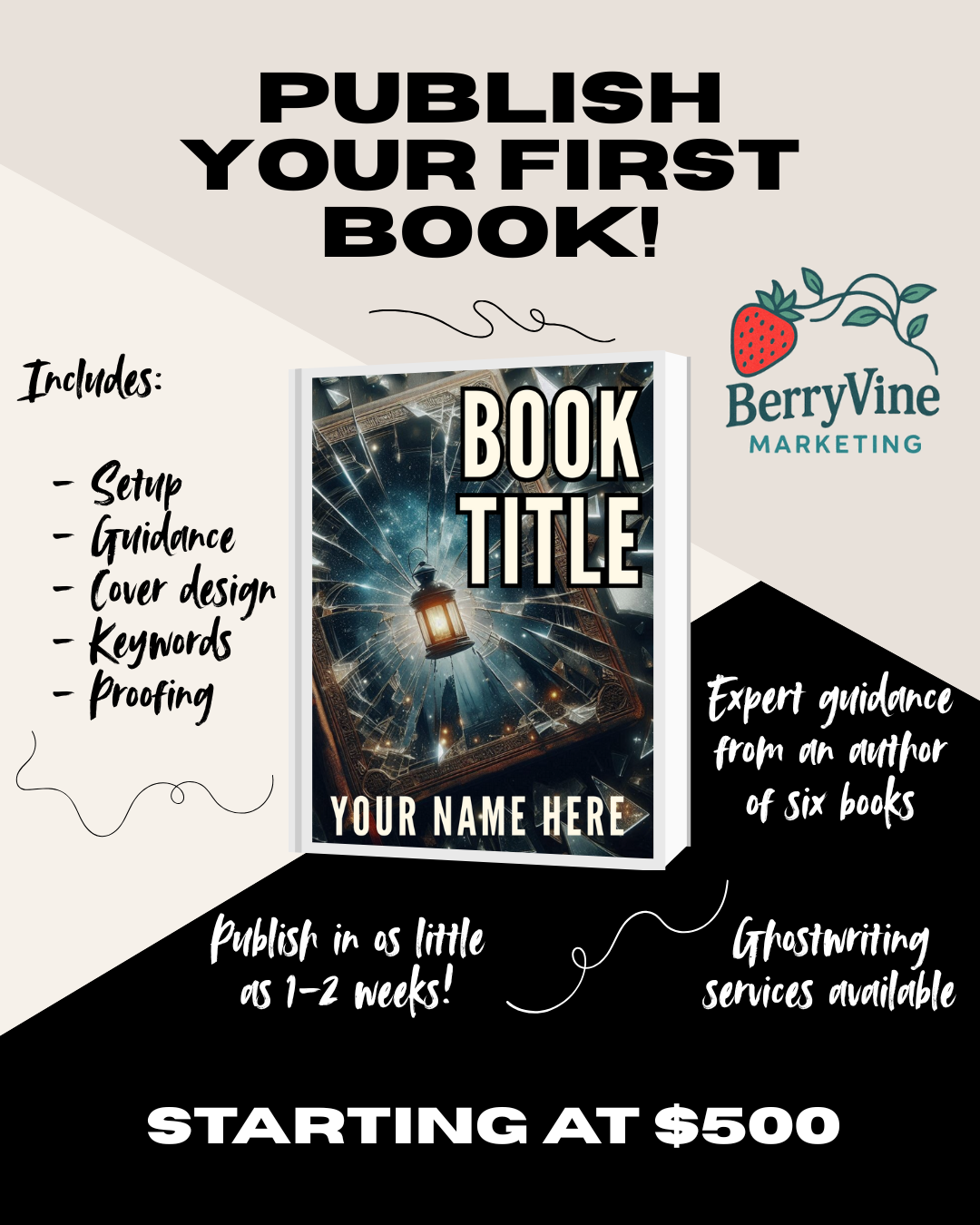
If you do go the self-publishing route, BerryVine Marketing can help with any stage of the process, from guidance and mentoring to cover design, proofing, formatting and more. We can even help you create an audio book with ACX.
Contact us today to learn more.
Share This Article: